Lantau in Typhoon Season
Lantau takes the weather head-on. It is Hong Kong's largest island and the one most exposed to the South China Sea: the cable car climbs an open hillside, the beaches face the swell, and the two ferry crossings that reach the island stop in a gale before almost anything else does. A tropical cyclone passing anywhere near Hong Kong therefore rearranges a Lantau day — sometimes with only a couple of hours' warning.
This page is the whole-island picture: how Hong Kong's warning system works, what each signal shuts and what keeps running, and how to re-plan a storm-affected visit so the trip still happens. The arrangements below are the operators' published general practice, not a forecast. Any of them can change on the day, so always check the operator before you set out.
How Hong Kong's warning system actually works
The first thing visitors get wrong is that Hong Kong's tropical cyclone signals are not forecasts. They are operational triggers: the Observatory issues a signal to tell the public that certain wind conditions exist or are expected, and the signal then switches on the arrangements that each operator has already planned. Signals warn about wind, not rain.
Rain is handled separately by the rainstorm warning system — three levels, amber, red and black. The Observatory notes the rainy season normally runs from April to September, heaviest in May and June, and that heavy rain can cause serious road flooding and landslips on top of anything a tropical cyclone is doing. You can get a black rainstorm warning with no typhoon at all, and the two systems are issued independently.
The signal that matters most for planning is the pre-No. 8 special announcement. The Observatory makes it when the No. 8 signal is expected within two hours. That two-hour window is your whole notice to get off exposed ground, cross to where you want to be and catch the last transport — which is why the drill below is worth reading before you need it.
What each signal means for a Lantau trip
The ladder is cumulative: each step assumes the arrangements of the step below are already in force. Wind figures are the Observatory's, measured near sea level.
| Signal | What the Observatory says it means | What it usually means on Lantau |
|---|---|---|
| No. 1 (Standby) | A tropical cyclone is centred within about 800 km and may affect Hong Kong | Normal service. Watch the next update; outdoor plans stay on. |
| No. 3 (Strong Wind) | Strong wind of 41–62 km/h is expected near sea level, with gusts over 110 km/h possible | The warning level, not a shutdown. Outdoor rides may pause; ferries can already thin out. |
| Pre-No. 8 notice | Special announcement when No. 8 is expected within two hours | Your two-hour window. Head back and catch the last transport now. |
| No. 8 (Gale or Storm) | Gale or storm winds of 63–117 km/h from a stated direction, gusts over 180 km/h possible | Most Lantau transport stops: cable car suspended, ferries suspended, most buses off. |
| No. 9 (Increasing Gale) | The gale or storm winds are increasing significantly | Stay indoors, away from exposed windows and doors. Do not travel. |
| No. 10 (Hurricane) | Hurricane-force winds of 118 km/h or more, with gusts over 220 km/h | Everything closed. Stay in a solid building until the signal is lowered. |
What closes, what still runs
The pattern to hold on to is simple: anything exposed to the wind stops well before the storm is overhead, and anything on rails or solid ground keeps going longest. The rows below are the operators' published general practice — confirm on the day.
| On Lantau | Normal day | At No. 8 and above |
|---|---|---|
| Ngong Ping 360 cable car | Runs from around 10am on weekdays, earlier at weekends and on public holidays | Suspended. The system is designed to shut at No. 8 and above, in a black rainstorm warning, in lightning, and in persistent 90 km/h winds or 135 km/h gusts — and the operator can stop it earlier on safety grounds. |
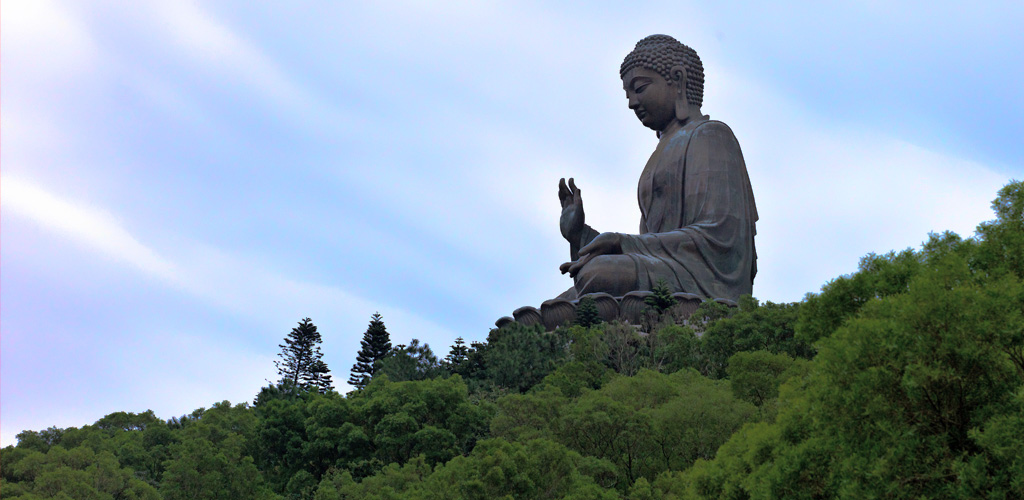
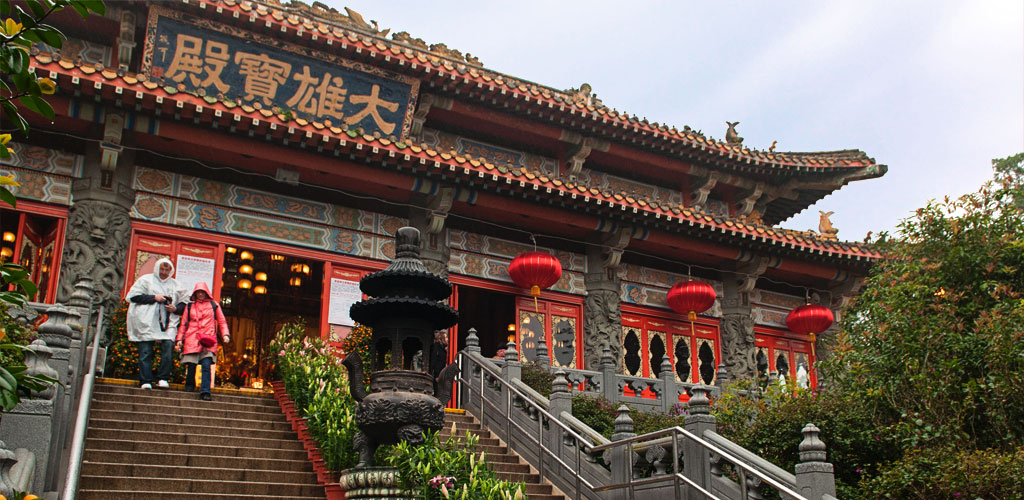
| Ngong Ping Village & the Big Buddha | Open, reached by cable car or by bus from Tung Chung | The village and Po Lin Monastery stay open when the cable car is down. The Big Buddha can still be reached by bus when the roads are open — see the note below. |
| New Lantao Bus | Daytime routes link Tung Chung, Mui Wo, Ngong Ping and Tai O | Most daytime routes are suspended at No. 8, with a limited service on a few fixed routes; all routes stop at No. 9. Buses may stop earlier if roads get bad. |
| Ferries (Central–Mui Wo, Discovery Bay) | Sun Ferry runs the Central–Mui Wo crossing from Central Pier No. 6 in about 35–40 minutes | Suspended or reduced. Ferries are among the first services to stop and the last to restart; the crew decide on the day from wind, sea state and storm tide. |
| MTR & Airport Express | Tung Chung line and the Airport Express run all day | MTR generally keeps running at the lower signals and reduces or suspends open-air sections in the strongest winds. Check MTR before you travel. |
| Hong Kong Disneyland | Open as scheduled | Open but curtailed: at No. 3 all outdoor attractions and entertainment are suspended, and the park closes if No. 8 is hoisted while it is open. |
| Beaches & lifeguards | Silver Mine Bay and the south Lantau beaches are patrolled in summer | No swimming. Stay out of the water and off the sand — a beach facing open sea is the worst place to shelter. |
| Trails & outdoor sights | The Lantau Trail, Sunset Peak and the coastal paths | Postpone. Exposed ridges and exposed paths are the first places to become dangerous, often before a signal is even raised. |
🚠 Can you still see the Big Buddha?
Very often, yes. Ngong Ping Village and Po Lin Monastery stay open even on days when the cable car is deliberately suspended, and New Lantao Bus runs from Tung Chung up to Ngong Ping when the roads are open. If the cable car is down in a storm, the bus is the fallback — so check whether the buses are running before you write off the day. See the Ngong Ping 360 guide and the Big Buddha page for the journey itself.
When a No. 8 is hoisted — the practical drill
The warning reaches you from several places at once. The Observatory publishes every signal on its website and the MyObservatory app, and the Dial-a-Weather telephone service reads the current warning; the number is 1878 200. Radio and television carry bulletins — when gale-force or stronger warnings are in force, English-language updates go out on the hour and half hour — and the Home Affairs Department's enquiry line on 2835 1473 picks up emergency and general weather enquiries. Turn on the radio early rather than refreshing a page; the broadcast is designed to be heard, not read.
Once the pre-No. 8 notice is out you have about two hours, and the clock runs fastest for the ferry. It is the crossing that stops first and restarts last on Lantau; if your day ends with a boat ride back to Central, that boat is your deadline, not the closing time of whatever you are visiting. Leave before the last transport rather than with it — a gale arriving between you and the pier is the situation to avoid. Once No. 8 is up, the advice is to be indoors, away from exposed windows and doors, and to stay there.
On money: a suspension is not usually a refund. Ngong Ping 360 states that its annual-pass holders are not entitled to a refund when the cable car is suspended for weather or a technical fault; the pass simply stays valid. Hong Kong Disneyland publishes its own inclement-weather arrangements, including how unused and used tickets are handled when a No. 8 is announced — read the terms on the day rather than assume. Tickets bought through a tour operator or reseller follow that seller's terms, not the operator's.
A rain-day Plan B on Lantau
A rainstorm warning is not a shutdown in the way a No. 8 is, and it is far more common. Amber and red leave the island working; a black rainstorm warning is the one that sends everyone indoors. That is the day to swap the island's outdoor itinerary for its indoor one.
💡 What to do when the weather turns
- Tung Chung — the town around the MTR station and the cable-car terminal has the island's biggest concentration of shopping and eating under cover, and it is where the buses and trains meet.
- Ngong Ping Village — the village and its indoor attractions stay open even when the cable car is suspended, so a cable-car-size day can still partly happen.
- A hotel day — Lantau's resorts are built for exactly this; a spa or pool afternoon beats a soaking on a ridge. See where to stay on Lantau.
- Hong Kong Disneyland — the park stays open in amber and red rain with its indoor rides running, and is a fully indoor-friendly option when the weather closes in.
- Postpone, don't push — hiking, beaches, the cable car, sunset viewpoints and boat trips are the things to move, not to force.
If you are flying out, the airport guide covers the terminals and the transport to them; the MTR and the Airport Express are usually the last services standing. And for the onward timetable once the weather clears, the Lantau and Hong Kong events calendar is where the rescheduled dates land.
Lantau typhoon season: frequently asked questions
Will the cable car run in a typhoon?
Not at No. 8 and above. Ngong Ping 360's system is designed to suspend operation at Signal No. 8, in a black rainstorm warning, in lightning, and in persistent 90 km/h winds or 135 km/h gusts, and the operator can suspend the service earlier — in a rainstorm or thunderstorm, for example — depending on conditions. Because the cable car runs across exposed hillside, expect it to stop well before the storm is overhead. Check the operator on the day.
Can I still see the Big Buddha when the cable car is down?
Usually, if the roads are open. Ngong Ping Village and Po Lin Monastery remain open on days when the cable car is suspended, and New Lantao Bus runs between Tung Chung and Ngong Ping when conditions allow. The bus is the plan-B route to the Big Buddha; check the day's bus status before you go.
Does a No. 3 signal close everything?
No. The No. 3 signal is a warning level, not a shutdown — most services keep running. It is the point at which exposed outdoor attractions start to pause and ferries can thin out, and it is your cue to watch the updates closely. The closures begin with the pre-No. 8 notice and the No. 8 signal itself.
Do the ferries stop in a typhoon?
They may be suspended or reduced from No. 8 upwards, and the crossing to Central is usually among the first services to stop. The crew judge each sailing on wind, sea state and storm tide, so the only reliable answer is the one on the operator's service page or app on the day. The Mui Wo ferry schedule and the Discovery Bay ferry schedule both carry the operators' contact details.
None of this needs to wreck a Lantau trip. The island keeps working below No. 8, the village and the Buddha stay reachable by bus when the cable car stops, and the storm is usually gone within a day. Know the ladder, watch the pre-No. 8 notice, and plan the day around what stays open rather than what closes.
For the rest of the island's transport and links, start with the Lantau transportation hub guide or how to get to Lantau.